If there’s one lift that gets unfairly blamed for injuries, it’s the deadlift.
“I can’t deadlift, it hurts my back.”
“Deadlifts are bad for your spine.”
“I’m just not built for deadlifts.”
The truth?
The deadlift isn’t the problem. Poor execution is.
What the Deadlift Is Actually Training
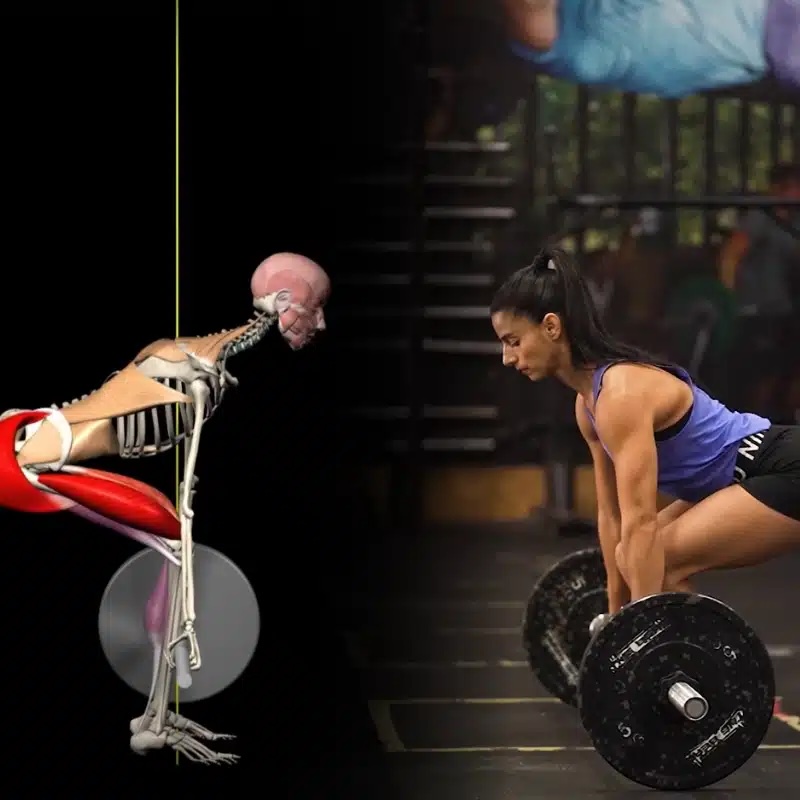
The deadlift is a full-body movement, not a “back exercise.”
Primary muscles involved:
- Glutes – the main driver of the lift
- Hamstrings – control the hinge and assist hip extension
- Quads – help initiate the pull from the floor
- Core (abs + obliques) – brace and protect the spine
- Lats – keep the bar close and the spine stable
- Upper back & grip – maintain posture and control
When done correctly, the deadlift teaches your body how to produce force safely and protect the spine under load—something you do every day when picking things up.
Why People Blame the Deadlift for Back Pain
Deadlifts don’t cause back issues.
Bad hinges do.
Most people who “hurt their back deadlifting” are actually:
- Squatting the deadlift instead of hinging
- Letting the bar drift away from their body
- Moving with a loose core
- Lifting with their spine instead of their hips
The spine isn’t meant to create movement under load—it’s meant to resist movement. When you lose that stiffness, your lower back ends up doing work it was never meant to do.
What People Are Doing Wrong
Here are the most common mistakes:
- No brace – ribs flared, abs relaxed
- Bar too far from the shins – creates unnecessary torque on the spine
- Hips shooting up first – turns it into a good morning
- Chasing weight instead of position
All of these shift the stress away from the glutes and into the lower back.
The Most Missed Cue in the Deadlift
If there’s one cue that fixes most deadlifts, it’s this:
“Push the floor away.”
Not:
- “Pull the bar”
- “Lift with your back”
- “Yank it off the ground”
When you think about pushing the floor:
- Your legs engage properly
- Your hips extend instead of your spine
- The bar stays close
- Your back stays neutral and strong
Deadlifts are a leg-driven movement with a braced torso, not a back pull.
The Bottom Line
Deadlifts:
- Strengthen your posterior chain
- Teach safe lifting mechanics
- Build real-world strength and resilience
Avoiding them doesn’t protect your back.
Learning to do them correctly does.
At MSP, we don’t fear big lifts—we coach them.
References
- McGill, S. M. (2016). Low Back Disorders: Evidence-Based Prevention and Rehabilitation (3rd ed.). Human Kinetics.
– Foundational research on spinal stability, bracing, and why improper loading (not deadlifts themselves) contributes to back pain. - National Strength and Conditioning Association (NSCA). (2021). NSCA’s Essentials of Strength Training and Conditioning (4th ed.). Human Kinetics.
– Comprehensive breakdown of deadlift biomechanics, muscle activation, and coaching cues. - Escamilla, R. F. (2000). Biomechanics of the Deadlift Exercise. Medicine & Science in Sports & Exercise, 32(7), 1265–1275.
– Demonstrates that proper deadlift mechanics distribute load through the hips and legs, not excessive lumbar stress. - Schoenfeld, B. J. (2010). Squatting kinematics and kinetics and their application to exercise performance. Journal of Strength and Conditioning Research.
– Supports hip-dominant lifting patterns and posterior chain recruitment relevant to deadlifts. - Cholewicki, J., & McGill, S. M. (1996). Mechanical stability of the in vivo lumbar spine. Clinical Biomechanics.
– Explains the importance of abdominal bracing and spinal stiffness during loaded lifts. - Hales, M. E., Johnson, B. F., & Johnson, J. T. (2009). Kinematic analysis of the powerlifting style squat and deadlift. Journal of Strength and Conditioning Research.
– Shows how bar path and proximity reduce spinal torque and injury risk.



.JPG)

